
When to Use Self-Aligning Ball Bearings? Applications & Misalignment Guide
Dealing with shaft bending or mounting errors? Choosing the right bearing is critical. Self-aligning ball bearings are the premier solution for applications struggling with misalignment issues that would destroy standard deep groove ball bearings.
When to Use Self-Aligning Ball Bearings?
These bearings are essential when:
-
The shaft and housing are difficult to align.
-
The shaft deflects (bends) under load.
-
Low friction and cool running at high speeds are required.
This Applications & Misalignment Guide covers everything from structure and design to TFL series availability and installation tips. Read on to ensure you choose the right bearing for your machinery.
What is a Self-Aligning Ball Bearing? (Structure & Design)
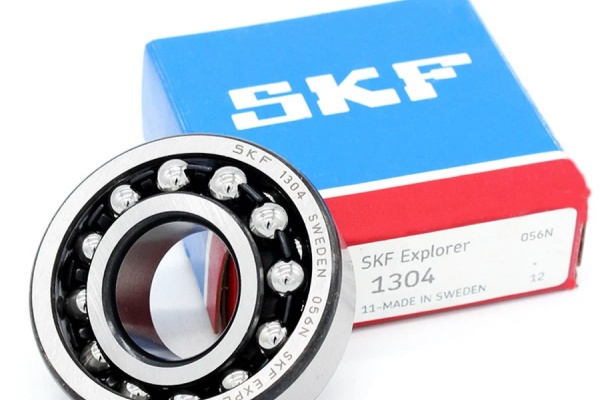
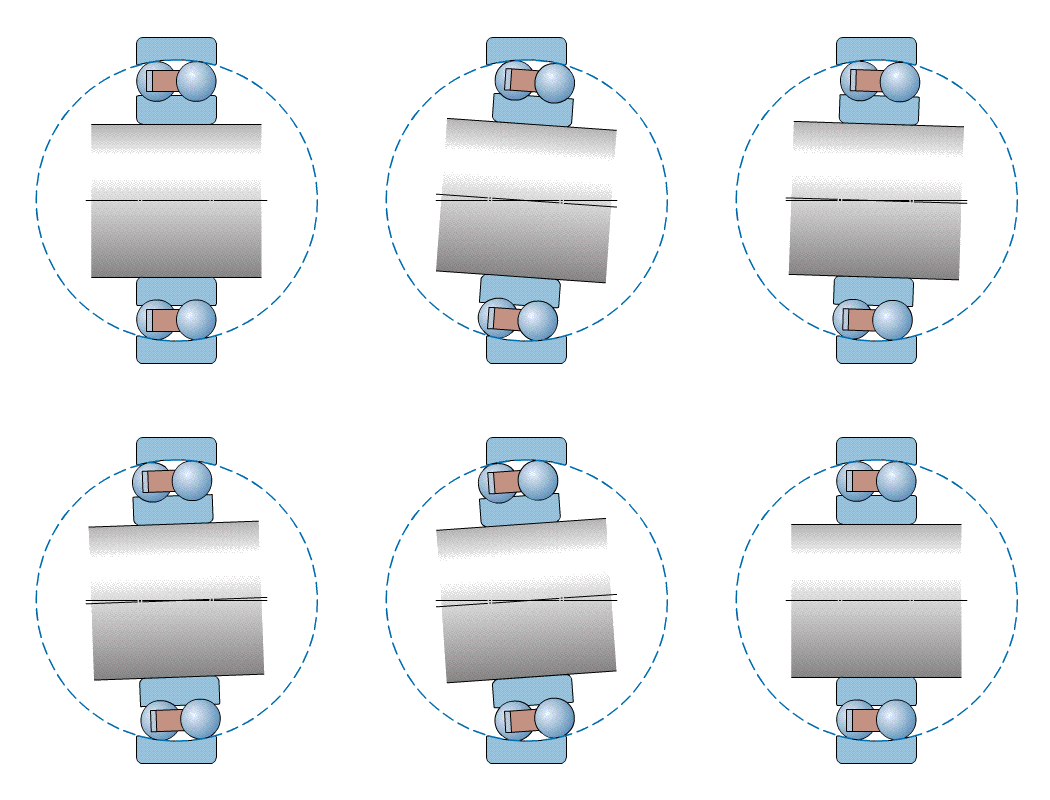
A self-aligning ball bearing is a double-row radial bearing featuring a continuous spherical raceway in the outer ring. This unique geometry acts like a ball-and-socket joint, allowing the inner ring, balls, and cage to rotate and swivel freely around the bearing center.
How it works:
Unlike rigid deep groove bearings, this structure gives the bearing “self-aligning” capabilities, meaning it can automatically adjust to angular deviations. It is specifically designed to compensate for:
-
Mounting & Machining Errors: Misalignment between the shaft and housing during installation.
-
Shaft Deflection: Bending of the shaft caused by loads or long spans.
-
Dynamic Misalignment: Movement that occurs while the machine is running.
Historical Fact: Originally invented by SKF in 1907, this design remains the gold standard for applications where perfect alignment is impossible. Notably, it generates the lowest friction of all rolling bearings, ensuring cooler running at high speeds.
Key Features: Why Choose Self-Aligning Bearings?
Before diving into specific uses, it is crucial to understand why engineers prefer this design over standard bearings. Beyond just handling misalignment, they offer distinct operational advantages:
-
Lowest Friction of All Rolling Bearings:
Due to the loose conformity between balls and the outer raceway, these bearings generate the lowest friction. This results in cooler running temperatures and enables higher operating speeds than most other bearing types. -
Extended Service Life & Maintenance Intervals:
Reduced heat generation means less stress on the lubricant and seals. This directly translates to longer grease life and reduced maintenance costs, especially in hard-to-reach areas. -
Excellent Noise and Vibration Reduction:
The smooth running characteristics make them ideal for applications requiring quiet operation, such as HVAC fans and precision electric motors. -
Load Capability (Radial vs. Axial):
Designed primarily for radial loads. Note: While they handle small axial loads, they are not suitable for heavy axial thrusts. For heavy-load misalignment solutions, consider Spherical Roller Bearings instead.
Engineering Note:
While Self-Aligning Ball Bearings are excellent for speed and alignment, they have limited axial load capacity. If your equipment deals with heavy loads + misalignment, please check our guide on Spherical Roller Bearings.
Self-Aligning Ball Bearings vs. Deep Groove Ball Bearings
A common question we receive from engineers is: “Why not just use a standard Deep Groove Ball Bearing (DGBB)? It’s cheaper and readily available.“
The answer lies in the battle between Rigidity vs. Flexibility.
The Problem with “Rigid” DGBBs:
Deep Groove Ball Bearings are the industry workhorses, offering high load capacity and versatility. However, they are rigid. They demand perfect alignment between the shaft and housing. If a DGBB is forced to operate with misalignment exceeding 0.1 degrees (approx. 6-10 minutes of arc), the balls will ride on the edge of the raceway. This creates dangerous internal stress, leading to:
-
Excessive noise and vibration.
-
Rapid temperature spikes.
-
Premature bearing seizure or cage failure.
The “Floating” Solution:
In contrast, Self-Aligning Ball Bearings are designed to “float.” By sacrificing a small amount of load capacity, they gain the ability to accommodate misalignment up to 3.0 degrees. They effectively decouple the shaft’s bending movement from the housing, ensuring the bearing keeps running smoothly even when the structure shifts.
Comparison Table
| Feature | Deep Groove Ball Bearing (DGBB) | Self-Aligning Ball Bearing | Winner |
|---|---|---|---|
| Misalignment | Very Poor (°) | Excellent (Up to 3°) | Self-Aligning |
| Friction & Heat | Low | Lowest (Runs cooler) | Self-Aligning |
| Radial Load Capacity | Good | Moderate | DGBB |
| Axial Load Capacity | Good (Two directions) | Limited (Low capability) | DGBB |
| High Speed Performance | Good | Excellent | Self-Aligning |
| Noise Level | Low | Very Low | Self-Aligning |
| Price | Low (Standard) | Moderate to High | DGBB |
Decision Verdict:
If your application ensures perfect alignment and requires heavy axial loads, stick with the Deep Groove type. However, if you face shaft deflection, installation errors, or lightweight frames that might warp, switching to a Self-Aligning Ball Bearing is the most cost-effective way to prevent frequent breakdowns.
Solving Shaft Misalignment Problems
The primary mission of a self-aligning ball bearing is to accommodate angular misalignment without sacrificing performance.
In real-world transmission systems, perfect alignment is a myth. Long shafts bend (“deflect”) under load, and separate bearing housings are rarely perfectly coaxial. A standard rigid bearing would suffer from edge stress and fail rapidly.
How much misalignment can it handle? (The 3° Rule)
Generally, the self-aligning design permits an angular misalignment of 2.5 to 3 degrees. However, the exact limit depends on the bearing series and sealing:
-
Open Bearings (e.g., 1200/1300 series): Typically handle the maximum misalignment (up to 3°).
-
Sealed Bearings (2RS): The seal limits the movement slightly (approx. 1.5° to 2.5°) to maintain grease integrity.
This flexibility ensures the machine operates smoothly despite installation errors, shaft bending due to shock loads, or foundation settling.
TFL Bearing Series Guide: Which One Do You Need?
We adhere to standard ISO dimensions but offer distinct series for specific load profiles:
-
1200 Series: The standard for light loads and high speeds.
-
1300 Series: Medium load capacity with slightly larger dimensions.
-
2200 Series (Wide): Features a wider inner ring and is commonly available with 2RS Seals for dusty environments.
-
2300 Series (Heavy Duty): Designed for heavier loads and demanding environments.
-
11200 (Extended Inner Ring): Special design for easy mounting on shafts without shoulders (using grub screws).
Custom dimensions and specific clearance (C3, C4) are available upon request.
Common Uses and Applications
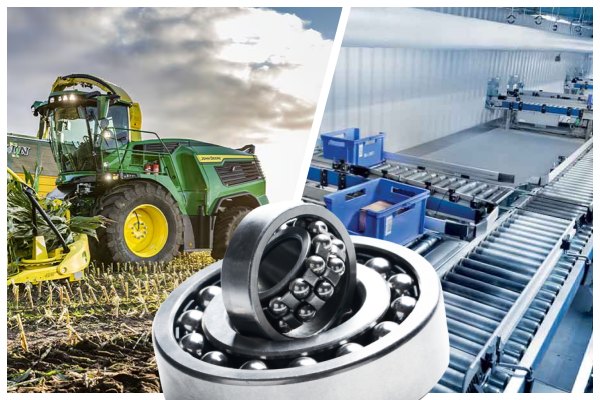
Where are self-aligning ball bearings most effective? They excel in industries that demand high speeds and low friction, yet suffer from structural flexing.
-
Agricultural Sector:
-
Combine Harvesters (Separators)
-
Straw Balers
-
Sowing Machinery
-
-
Textile Industry:
-
Carding Machines
-
Spinning Frames (requiring low starting torque)
-
-
Industrial Ventilation:
-
High-speed Exhaust Fans
-
Air Blowers
-
-
Food & Beverage Processing:
-
Light-duty belt conveyors
-
Bottling lines (where precision alignment is difficult)
-
-
Pulp & Paper:
-
Paper converting machinery
-
Trimming equipment
-
Specific Application Note:
These bearings are particularly suitable for commercial shafting applications where the shaft is supported at multiple points, making precise alignment difficult and costly to achieve.
Where NOT to use:
Do not use Self-Aligning Ball Bearings in applications with:
-
Heavy Axial (Thrust) Loads.
-
Heavy Shock Loads (e.g., Rock Crushers).
For these, use Spherical Roller Bearings.
Seals, Lubrication, and Installation Tips
To ensure maximum performance, attention to detail during selection and installation is key.
-
Sealed vs. Open Variants:
-
2RS (Sealed): Equipped with NBR contact seals. These are “lubricated for life” with high-quality lithium grease suitable for -40°C to +100°C. Do not heat or wash these before installation.
-
Open Type: Ideal for gearboxes or oil-bath lubrication systems where friction must be kept to an absolute minimum.
-
-
Mounting Configurations (Cylindrical vs. Tapered):
-
Cylindrical Bore: Mounted directly onto the shaft with an interference fit.
-
Tapered Bore (Suffix K): Requires an Adapter Sleeve (H-Series). This allows for easier mounting on standard shafts and permits adjustment of internal clearance.
-
Installation Pro-Tip:
Because the outer ring swivels freely, it can accidentally swing out during handling, causing balls to dislodge. Always keep the bearing flat or secure the outer ring during installation to prevent damage.
Conclusion
The Self-Aligning Ball Bearing is the solution for applications facing shaft deflection or alignment challenges. It offers the unique combination of lowest possible friction, cool running, and forgiveness for mounting errors.
Need help selecting the right bearing for your application?
Don’t guess. Whether you need a standard 1200 series or a heavy-duty 2300 series with adapter sleeves, TFL Bearing has the stock and expertise to keep your machinery running.
Contact TFL Bearing Today:
-
Contact: Candice
-
Email: info@tflbearing.com
-
MP/WhatsApp: (86) 15806631151
-
WeChat: 15806631151
Factory Direct Pricing | Fast Global Shipping | ISO Certified
Frequently Asked Questions (FAQ)
Q: Can self-aligning ball bearings handle axial loads?
A: They can handle limited axial loads, but their primary strength is radial load. For heavy axial loads with misalignment, use Spherical Roller Bearings.
Q: What is the difference between cylindrical and tapered bore?
A: Cylindrical bores mount directly to the shaft. Tapered bores (marked with suffix “K”) use an adapter sleeve to lock onto the shaft, making installation easier.
Q: Do I need to grease the 2RS sealed bearings?
A: No. The 2RS versions are “lubricated for life” and do not require maintenance.