
Why Road Roller Bearings Fail: A Case Study of EAE4 vs. MB Cages
Imagine having your heavy equipment break down just one week after a full maintenance cycle.
For a construction team, road roller bearing failure isn’t just about the replacement cost of a single part; it represents thousands of dollars in lost project time, idle labor, and missed deadlines. This was the exact nightmare facing one of our long-term clients in Cambodia recently. They were using a standard spherical roller bearing (EAE4) for their Vibratory Road Roller (Compactor). However, the parts were failing catastrophically after only 7 days of operation.
In this case study, we analyze exactly why the customer’s original stamped steel cage (EAE4) failed under high vibration, and how our engineering team solved the problem by upgrading to a machined brass cage (MB) design.
The Challenge: Catastrophic Failure in 7 Days
Equipment: Vibratory Road Roller (Vibration Drum Mechanism)
Original Part: 22320EAE4
-
EA: Indicates a high-load capacity internal design. Crucially, as the text notes, this design utilizes a Stamped Steel Cage (pressed steel).
-
E4: Typically denotes the presence of an oil groove and holes in the outer ring for lubrication (standard on most sphericals now).
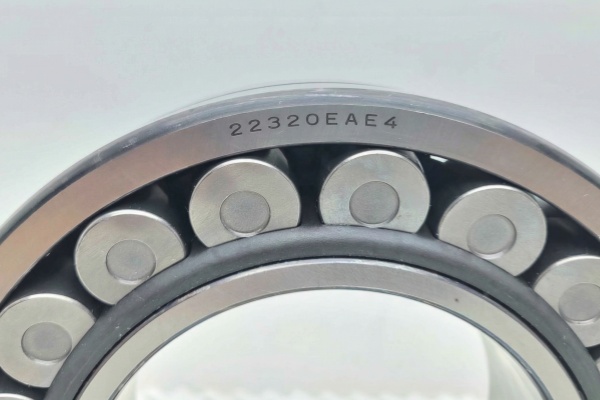
Symptom: Excessive noise, vibration spike, followed by total shaft seizure.
Our client contacted us in a panic. They had recently replaced the bearings on the main vibration shaft of their road roller, expecting them to last for the full project duration. Instead, the machine ground to a halt within a week.
Upon disassembling the housing to perform a root cause analysis, the scene was chaotic:
-
Cage Fracture (Fatigue Failure): The stamped steel cage (retainer) had suffered from metal fatigue and snapped in multiple places due to the high-frequency vibration.
-
Detached Rollers: Without the cage to guide them, the rolling elements had fallen out of alignment and bunched together, blocking the raceway.
-
Shaft Damage (Secondary Failure): The sudden seizure caused severe scoring on the vibration shaft, forcing the client to perform expensive machining repairs beyond just replacing the bearing.
The client’s initial reaction was understandable: “Did we buy a fake bearing? Is this a manufacturing defect?”
We asked them to send photos of the failed unit. After a quick technical analysis, we confirmed that the bearing wasn’t “bad” quality—it was simply the wrong tool for the job.
Root Cause Analysis: The Weakness of EAE4 (Stamped Steel) Cages Under Vibration
To understand the failure, we must look at the specific bearing design they were using: 22320EAE4.
In bearing nomenclature, the suffix “E” or “EA” typically indicates a high-load capacity design equipped with a Pressed (Stamped) Steel Cage. While these bearings are excellent for general rotation applications (like conveyor belts, fans, or gearboxes), they have a fatal weakness when subjected to the extreme environment of a vibratory roller.
The “Vibration” Factor: Why Steel Fails
Road rollers and vibrating screens operate under conditions that tear thin metal apart. Here is the physics behind the failure:
-
Low Mass & Inertia: Stamped steel cages are thin and lightweight. In a vibratory application, the eccentric motion creates massive centrifugal forces. The light steel cage cannot stabilize the heavy rollers effectively under these G-forces.
-
Resonance & Deformation: Because the steel cage is essentially a thin sheet of metal, it is prone to structural resonance. Under high-frequency vibration, the cage begins to flex and deform (flutter), losing its precise shape.
-
Metal Fatigue (The Paperclip Effect): As the cage deforms repeatedly thousands of times per minute, it suffers from metal fatigue. Like bending a paperclip back and forth until it snaps, the steel cage eventually fractures, causing the catastrophic seizure we saw in the photos.
The Conclusion:
The steel cage in the 22320EAE4 didn’t fail because it was “weak”—it failed because it was too flexible. The failure was a classic Application Mismatch, not a manufacturing defect.
The Solution: Upgrading to TFL 22320MB/W33 C4
We advised the client to stop using the standard “E” type immediately. Instead, we implemented a heavy-duty specification engineered specifically for Vibrating Screens and Road Rollers: the TFL 22320MB/W33 C4.
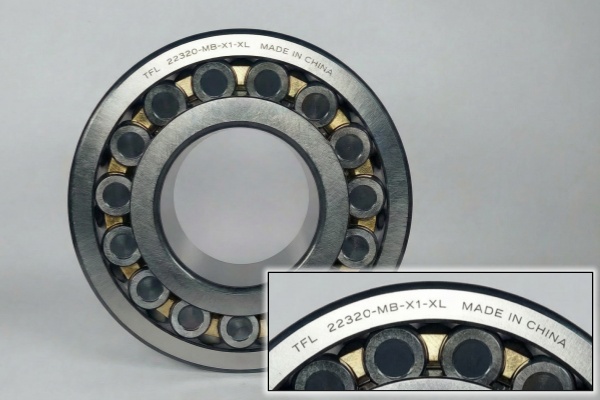
Here is the technical breakdown of why this specification works where others fail:
The Cage Upgrade: Machined Brass (MB)
The single most critical change is moving from a stamped steel cage to Machined Brass (MB).
-
Vibration Damping: Unlike steel, which rings and vibrates (resonates), brass is a denser, softer metal with excellent natural damping properties. It absorbs shock loads rather than transmitting them.
-
Self-Lubricating Properties: Brass has a low coefficient of friction. Under extreme start-up loads or momentary lubrication loss, the brass material itself provides a “fail-safe” lubricity, preventing the catastrophic steel-on-steel welding that seized the original bearing.
-
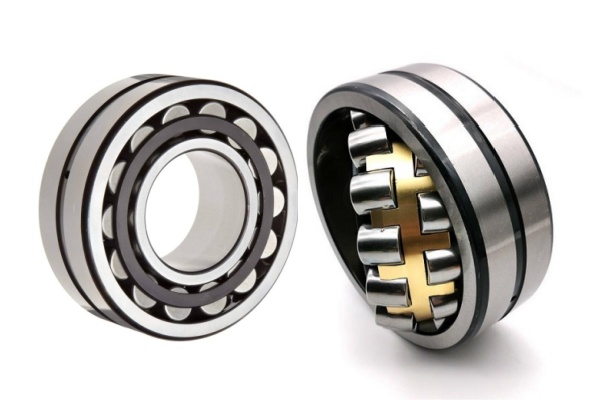
Solid Construction: This is not a bent sheet of metal. It is a solid, two-piece component machined from a single block of high-grade brass, offering superior structural integrity.
The Clearance: C4 (Greater than C3)
Standard bearings typically use C0 (Normal) or C3 clearance. However, for a road roller, standard clearance is a death sentence.
-
Why C4 is Critical: Road rollers face a “double heat” threat: internal friction heat + external heat from 150°C+ hot asphalt.
-
The “Breathing Room”: We selected C4 Clearance (which is larger than C3) to account for this extreme thermal expansion. As the inner ring heats up and expands, the extra C4 gap ensures the bearing still has room to rotate freely without seizing (locking up).
Lubrication: W33 Feature
The W33 specification includes a peripheral lubrication groove and three oil holes on the outer ring.
-
Efficient Flushing: This design allows fresh grease to be pumped directly into the center of the raceways during maintenance. This effectively flushes out contaminants and old grease, extending the service intervals.
The Result: From 7 Days to 6 Months (25x Lifespan Increase)
Confident in our engineering analysis, TFL Bearings provided two sample sets of the 22320MB/W33 C4 for immediate field testing.
The client installed them with a degree of skepticism—after all, they had been burned by weekly failures—but the performance data quickly converted them.
The Timeline of Success:
-
Week 1 (The Critical Hurdle): The operator reported significantly smoother operation with zero abnormal noise. The “vibration spike” that usually preceded failure never appeared.
-
Month 1: A routine inspection revealed the grease was still clean, and the brass cage showed no signs of wear or deformation.
-
Month 6 (Present Day): The equipment is still running perfectly on the same set of bearings.
-
Impact: By upgrading from a stamped steel cage to machined brass, the bearing service life increased by over 2500%.
-
The ROI Breakdown:
The value wasn’t just in the price of the bearing; it was in the savings on downtime:
-
Eliminated: 24+ weeks of recurring replacement labor.
-
Saved: Thousands of dollars in potential idle crew time and project penalties.
Customer Feedback:
“We were honestly ready to scrap the machine, thinking the main shaft was bent beyond repair. Your advice on the Brass Cage saved us. The TFL MB bearings are now the standard specification for our entire road roller fleet.”
— Project Manager, Construction Firm (Cambodia)
Summary Table: EAE4 vs. MB Cages for Vibratory Applications
For maintenance managers and engineers needing a quick reference, this table highlights why the upgrade is critical for road rollers and vibrating screens:
| Feature | 22320EAE4 (The Wrong Choice) | TFL 22320MB/W33 C4 (The Upgrade) |
|---|---|---|
| Cage Material | Stamped Steel (Thin, Lightweight) | Machined Brass (Solid, Heavy-duty) |
| Vibration Handling | Poor. Prone to resonance, "fluttering," and fatigue cracking. | Excellent. Brass naturally dampens vibration and absorbs shock loads. |
| Lubrication Safety | None. Steel-on-steel contact causes instant seizure if lube film breaks. | Self-Lubricating. Brass material acts as a fail-safe during high-friction moments. |
| Internal Clearance | Standard / C3 (Risk of thermal locking) | C4 (Heat Resistant). Allows for thermal expansion in hot asphalt environments. |
| Typical Failure Mode | Cage fracture → Roller jamming → Shaft damage. | Gradual wear over time (Predictable maintenance). |
| Best Application | General rotation (Conveyors, Fans, Gearboxes). | High-Vibration: Road Rollers, Crushers, Shakers. |
| Cost Implication | Low Purchase Price / High Downtime Cost. | Higher Purchase Price / Zero Unplanned Downtime. |
Important Note: Context is Everything
We want to be perfectly clear: The 22320EAE4 is NOT a “bad” bearing.
In fact, for standard applications with steady rotation—such as conveyor belts, fans, or general industrial gearboxes—the EAE4 (Pressed Steel Cage) design is efficient, cost-effective, and offers excellent high-load performance.
However, operating conditions dictate design choice.
-
For Static/Steady Loads: The steel cage is perfect.
-
For High Vibration/Impact: The steel cage is a liability.
The lesson here isn’t that “Brass is better than Steel.” The lesson is that engineering success comes from matching the internal structure (Cage, Clearance, Grease) to the specific realities of your working environment. Using a standard bearing in a high-vibration application is like wearing running shoes to a construction site—they are great shoes, just not for that job.
Read our full technical breakdown: [Guide to Spherical Roller Bearings: Suffixes, Design & Series Application] (Learn how to decode CC, CA, MB, E1, and W33 to pick the perfect bearing for your specific industry.)
Bonus: 3 Installation Tips for Vibratory Bearings
Even the best bearing will fail if installed incorrectly. To get the maximum life out of your new 22320MB/W33 C4, ensure your maintenance team follows these rules:
-
Check Shaft Tolerances (The “Tight Fit” Rule):
Vibratory applications require a tighter shaft fit (interference fit) than standard applications to prevent the inner ring from creeping or spinning on the shaft. Always verify the shaft diameter hasn’t been worn down by previous failures. -
Don’t Over-Grease:
More grease isn’t always better. Over-filling causes churning and excessive heat build-up. Aim to fill the bearing 30-40% of its free space, leaving room for heat expansion. -
Align the Housing:
Spherical roller bearings can handle misalignment, but constant misalignment generates extra heat. Ensure the vibration drum housing is concentric to minimize stress.
Conclusion
As this case study demonstrates, when it comes to heavy machinery like road rollers, “fitting the shaft” isn’t enough.
A bearing that fits the dimensions but fails the application is the most expensive bearing you can buy. The cost of the part is negligible compared to the thousands of dollars lost in downtime, idle crews, and missed project deadlines.
At TFL Bearings, we don’t just sell part numbers from a catalog. We provide engineered solutions that bridge the gap between price and performance. Whether it’s choosing the right cage material, calculating the correct clearance, or analyzing failure modes, our goal is simple: to reduce your downtime and increase your profit margins.
Is your machinery suffering from frequent failures?
Don’t just replace the bearing—upgrade the solution.
[Contact TFL Bearings Engineers Today] for a free consultation and Root Cause Analysis. Let’s keep your project moving forward.