
Bearing Material Guide: Ceramic vs. Stainless Steel vs. Bearing Steel
Introduction
Bearings might be hidden components, but the bearing material you choose dictates the performance, speed, and lifespan of your entire machine. Whether you are upgrading a road bike or sourcing for industrial machinery, the debate often comes down to one question: Ceramic vs. Steel bearings—which is actually better?
From the industry-standard Chrome Steel (Bearing Steel) and rust-proof Stainless Steel to high-performance Hybrid Ceramic and Full Ceramic options, each material serves a specific purpose. Choosing the wrong one can lead to premature failure, while the right choice ensures maximum efficiency.
In this guide, we break down the pros, cons, and technical differences in plain English. In a rush? Here is a quick comparison at a glance:
Quick Comparison: Which Material Should You Choose?
| Feature | Bearing Steel (Chrome) | Stainless Steel | Hybrid Ceramic | Full Ceramic |
|---|---|---|---|---|
| Cost | Lowest | Medium | High | Very High |
| Max Speed | Good | Moderate | Excellent | Extreme |
| Durability | High | High | Very High | Brittle (Fragile) |
| Rust Resistance | Low | Good | Excellent | Perfect (100%) |
| Best For | General use, heavy loads, & budget builds | Wet environments & corrosion resistance | High speed, cycling, & electric motors | Extreme heat, chemicals, & lightweight needs |
What Are the Main Bearing Materials?
-
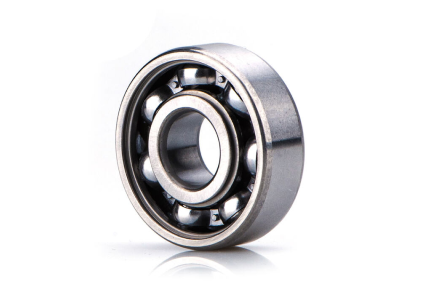
Chrome Steel (Bearing Steel / SAE 52100): The most common material for ball bearings. It offers high hardness and excellent load capacity but is prone to rust if not protected.
-
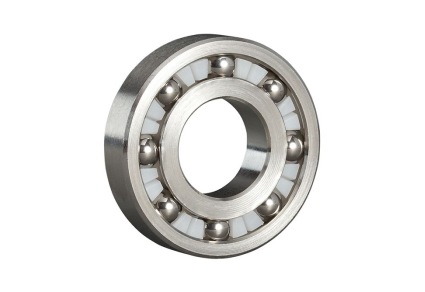
Stainless Steel (AISI 440C or 316): Designed for corrosion resistance. These are essential for food processing or marine environments where water or moisture is present.
-
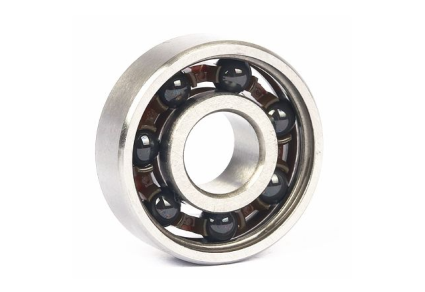
Hybrid Ceramic: The “middle ground” high-performer. These feature standard steel rings paired with Silicon Nitride (Si3N4) ceramic balls to reduce friction and increase speed.
-
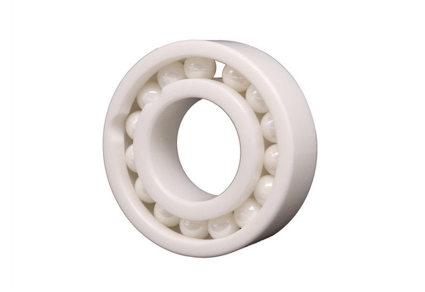
Full Ceramic: Specialized bearings made entirely from ceramic materials like Zirconia (ZrO2) or Silicon Nitride. They are non-magnetic, non-conductive, and extremely heat-resistant.
Which one fits your application? Let’s dive deep into the pros and cons of each.
Chrome Steel Bearings (Bearing Steel): The Industry Standard
When people talk about “standard bearings,” they are referring to SAE 52100 Chrome Steel. This is the most widely used bearing steel material in the world for a reason. It is incredibly hard, boasting a Rockwell hardness (HRC) of 60-64, which allows it to carry heavy loads without deforming.
However, it is not “stainless.” It requires oil or grease to operate smoothly and prevent rust.
Pros
-
High Load Capacity: Due to its extreme hardness, chrome steel handles heavy radial and axial loads better than stainless steel.
-
Cost-Effective: Because it is the industry standard, it offers the best performance-to-price ratio.
-
Quiet Operation: Steel absorbs vibration well, making these bearings run quietly when lubricated properly.
Cons
-
Prone to Rust: This is its biggest weakness. If the grease dries out or if it is exposed to water, bearing steel will rust quickly.
-
Temperature Limits: Unlike ceramic, steel can expand and deform at very high temperatures (typically above 120°C / 250°F without special heat treatment).
-
Heavier: Steel is denser and heavier than ceramic, which can be a disadvantage in weight-critical applications like cycling or aerospace.
Best For
-
Automotive parts (wheels, transmissions).
-
Electric motors and fans.
-
General industrial machinery where the environment is dry and clean.
Stainless Steel Bearings: The Rust-Proof Solution
When moisture, chemicals, or strict hygiene standards are involved, standard steel just won’t cut it. This is where Stainless Steel Bearings come in. The most common grade is AISI 440C, a high-carbon stainless steel that balances hardness with corrosion resistance.
Unlike chrome steel, these bearings can withstand exposure to water and damp air without rusting immediately, making them the go-to choice for washdown environments.
Pros
-
Corrosion Resistance: The chromium content forms a passive film that protects the bearing from water and humidity.
-
Food & Medical Safe: They are easy to clean and often used with food-grade grease (H1), making them compliant with FDA standards for food processing machinery.
-
Heat Resistance: 440C stainless steel generally handles higher temperatures (up to 250°C) better than standard chrome steel because the material is more stable.
Cons
-
Lower Load Capacity: Stainless steel is softer than chrome steel. Typically, an AISI 440C stainless bearing has about 15-20% less load capacity than a 52100 chrome steel bearing.
-
Higher Cost: Due to the material cost and machining difficulty, they are significantly more expensive than standard steel.
-
Still Magnetic: Important Note: Standard 440C stainless steel bearings are magnetic. If you need a completely non-magnetic bearing, you would need 304 or 316 stainless (which are much softer) or full ceramic.
Best For
-
Food and beverage processing (washdown zones).
-
Medical devices and pharmaceutical equipment.
-
Fishing reels and marine applications.
Hybrid Ceramic Bearings: The Best of Both Worlds
What happens when you combine the durability of steel rings with the speed of ceramic balls? You get the Hybrid Ceramic Bearing.
These bearings feature standard SAE 52100 chrome steel rings matched with Silicon Nitride (Si3N4) ceramic balls. Because ceramic balls are approximately 40% lighter and significantly harder than steel balls, they generate less centrifugal force and friction, allowing the bearing to spin faster and cooler.
Pros
-
Higher Speeds (RPM): With lighter balls and less rolling resistance, hybrid bearings can operate at speeds 30-50% higher than all-steel bearings without overheating.
-
Electrical Insulation: (Crucial for Motors) Ceramic balls are non-conductive. This prevents electrical currents from passing through the bearing, eliminating “electrical arcing” damage common in electric motors and generators.
-
Extended Service Life: They typically last 3 to 5 times longer than steel bearings because the ceramic balls polish the steel raceways as they run, preventing seizing.
Cons
-
Price: While cheaper than full ceramic, they are still significantly more expensive than standard steel bearings.
-
Sensitive to Shock Loads: While the steel rings are tough, the ceramic balls are brittle. High-impact shocks (like jumping off a ramp on a skateboard or heavy industrial crashing) can crack the balls.
Best For
-
High-Speed Applications: CNC Spindles, dental handpieces, and turbochargers.
-
Electric Motors: To prevent electrical corrosion (VFD motors).
-
Performance Sports: Road bike hubs, inline skates, and skateboard bearings (e.g., 608 size).
Full Ceramic Bearings: Solution for Extreme Environments
When standard steel or even hybrid bearings fail, Full Ceramic Bearings take over. Constructed entirely from ceramic material (both rings and balls), these bearings contain no metal parts.
They are typically made from two specific materials:
-
Zirconia (ZrO2): Usually white in color. It offers excellent heat expansion properties and is slightly more affordable.
-
Silicon Nitride (Si3N4): Usually black or dark grey. It is harder, lighter, and superior for high-speed applications.
Pros
-
Total Chemical Inertness: They are virtually immune to corrosion. They can operate submerged in salt water, acids, or alkalis without degrading.
-
Extreme Temperature Resistance: Unlike steel which softens at high heat, full ceramic bearings can operate in temperatures up to 800°C (1470°F) (depending on the cage material) without deforming.
-
Non-Magnetic & Non-Conductive: Essential for medical equipment like MRI scanners or semiconductor manufacturing where magnetism or electricity must be eliminated.
-
Can Run Dry: Full ceramic bearings often do not require any grease or oil to run, making them perfect for clean environments where lubricant contamination is a risk.
Cons
-
Brittle (Low Impact Resistance): This is the main trade-off. Ceramic is extremely hard but has low fracture toughness. A sudden heavy impact (like a hammer blow or a deep pothole) can crack the rings.
-
Prohibitive Cost: They are the most expensive option on the market, often costing 10x to 20x more than standard steel bearings.
Best For
-
Chemical processing plants (acids/plating).
-
High-temperature kilns and furnaces.
-
Medical imaging equipment (MRI) and vacuum environments.
Breakdown: Material Comparison Table
| Feature | Chrome Steel (52100) | Stainless Steel (440C) | Hybrid Ceramic | Full Ceramic (ZrO2/Si3N4) |
|---|---|---|---|---|
| Corrosion Resistance | Poor (Prone to Rust) | Good (Resists Water) | Moderate (Steel Rings Rust) | Superior (Chemically Inert) |
| Load Capacity | Excellent (Heavy Duty) | Moderate (Lower Load) | Good | Low (Brittle Material) |
| Max Speed (RPM) | Standard | Standard | Very High | High |
| Magnetic Properties | Magnetic | Magnetic (440C Grade) | Magnetic (Steel Rings) | Non-Magnetic |
| Electrical Conductivity | Conductive | Conductive | Insulated (Non-Conductive) | Insulated (Non-Conductive) |
| Price Point | Low (Budget-Friendly) | Moderate | High | Premium (Most Expensive) |
How to Choose the Right Bearing Material
1. Check the Environment (Is it wet?)
-
Yes (Saltwater/Chemicals): You need Full Ceramic or Stainless Steel. Standard steel will fail within days.
-
No (Clean/Dry): Stick to Chrome Steel (Bearing Steel). It’s stronger and cheaper.
2. Define the Load (Is it heavy?)
-
Heavy Impact/Crushing Loads: Avoid ceramic. Chrome Steel is the toughest option here.
-
Light Load/High Speed: Hybrid Ceramic is your best bet for efficiency.
3. Consider Speed & Heat
-
High RPM (>20,000) or High Heat: Hybrid Ceramic or Full Ceramic reduces friction and heat buildup where steel would expand and seize.
4. What is the Budget?
-
If performance is critical (e.g., racing, aerospace), the high cost of Ceramic is justified.
-
For general repairs or household fans, Chrome Steel provides the best value.
Which One is Right for You?
-
Need a workhorse for heavy machinery? Stick to Chrome Steel.
-
Battling rust in a food plant? Upgrade to Stainless Steel.
-
Chasing speed records or solving electrical arcing? Go with Hybrid Ceramic.
Still not sure which material fits your project?
Contact Our Engineering Team for a Free Consultation
FAQ: Common Questions About Bearing Materials
Q: Are ceramic bearings better than steel?
A: Not always. Ceramic bearings are better for speed, heat resistance, and weight reduction. However, steel bearings are better for heavy loads and impact resistance. If you put a ceramic bearing on a heavy-duty truck, it might crack; if you put it on a racing bike, it will fly.
Q: Do ceramic bearings make a difference?
A: Yes, especially in high-speed applications. Because ceramic balls are harder and smoother, they reduce rolling resistance. In cycling or skating, this translates to “free speed” and less effort. In industrial motors, it means cooler running temperatures and longer life.
Q: What is the difference between bearing steel and stainless steel?
A: Bearing Steel (Chrome Steel) has higher carbon content, making it harder and able to carry heavier loads, but it rusts easily. Stainless Steel has added chromium to prevent rust, but it is slightly softer and has a lower load rating.