Bearing creep is a major cause of premature failure in industrial equipment. For engineers, it’s a silent killer that not only affects performance but can lead to costly downtime.
Today, we will take an in-depth look at the causes of bearing creeps, how they damage bearings, and effective solutions to address them.
What is Bearing Creep?
Bearing creep refers to the unwanted relative sliding between a rolling bearing and its mating shaft or housing bore.
This phenomenon is common in industrial equipment, especially in machines that operate for extended periods. Bearing creep can be categorized into two types:
Inner ring creep – when the inner ring slides against the shaft.
Outer ring creep – when the outer ring slides against the housing bore.
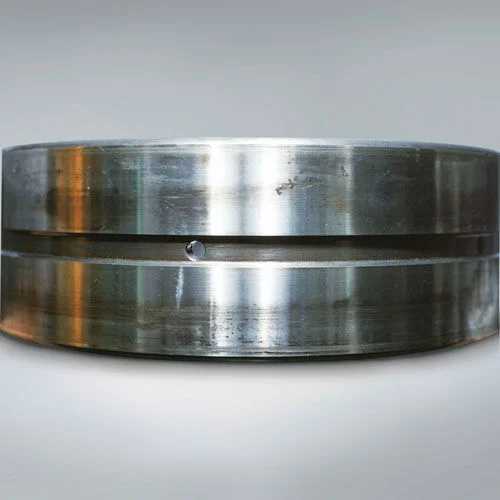
Damage caused by bearing creep on the ring
5 Major Causes of Bearing Creep
Several factors contribute to bearing creep, including:
Improper Fit Tolerance
This is the most common cause. The fit tolerance between the bearing and the shaft or housing is a key factor.
If the fit is too loose (clearance fit), there is insufficient pressure between the bearing and the mating surface, which fails to generate enough static friction to hold them in place. As a result, under torque, relative sliding occurs, leading to bearing creep.
Poor Machining and Installation Accuracy
The machining and installation precision of the shaft, bearing, and housing significantly affect bearing performance.
If the machining accuracy is insufficient, such as having an improper surface roughness, or if the bearing is installed incorrectly, excessive clearance may occur, increasing the risk of bearing creep.
Temperature Differences
During operation, bearings generate heat, leading to temperature differences between the shaft, bearing, and housing.
If the temperature difference is significant, the inner or outer ring of the bearing may expand or contract, disrupting the original fit tightness and causing bearing creep.
Excessive Vibration
Vibration during operation increases dynamic loading on bearings, subjecting mating surfaces to cyclic impacts.
Continuous vibration leading to mating surfaces wear and eventually causing bearing creep.
Bearing Material Issues
The material properties of bearings directly affect their strength, stiffness, and wear resistance.
If the bearing material does not meet the required specifications or has an excessively high friction coefficient, it may become more prone to bearing creep.
How Bearing Creep Leads to Failure
Bearing creep can severely damage bearings and related components, affecting the rolling elements inside the bearing.
Under normal operation, rolling friction primarily occurs in the load zone between the rolling elements and raceways. However, when bearing creep arises, the frictional state changes, causing the friction from pure rolling to a mixed state, leading to several negative consequences.
Accelerated Wear
When bearing creep occurs, the originally tight fit between the bearing and the shaft or housing is relative sliding. This sliding friction increases wear on both the shaft and the housing bore.
Over time, the shaft may become thinner, and the housing bore may enlarge, reducing equipment precision and potentially causing part failure.
At the same time, the mixed rolling and sliding friction inside the bearing can cause wear on the rolling elements and raceways, leading to noise, overheating, and even bearing failure.
Localized Overheating
Increased friction from bearing creep converts more mechanical energy into heat, causing localized temperature rise in the bearing. This localized overheating not only accelerates lubricant aging and failure but can also cause the mechanical properties of bearing material to decrease, further exacerbating wear.
Fit Precision Deterioration
Bearing creep can damage the original fit precision, increasing the clearance between the bearing and its mating components. This negatively impacts the normal operation of equipment, reducing accuracy and efficiency.
Inducing Other Failures
Bearing creep may lead to additional internal damage, such as increased contact stress between the rolling elements and raceways. This can cause fatigue pitting and spalling.
In addition, bearing creep may also cause the cage of the bearing to deform, thus affecting the normal operation of the rolling elements.
Solutions to Bearing Creep
To address bearing creep, the following measures can be taken:
Optimize Fit Tolerance
Select the appropriate fit tolerance based on operating conditions and load requirements to ensure that the bearing fits securely with the shaft and housing without being too tight or too loose. For a complete selection chart and rules for different load types, read our Bearing Fits & Shaft Tolerances Guide.
Industry Standard Example: The H7/m6 Combination
For most general industrial applications (like electric motors or pumps) where the shaft rotates and the housing is stationary, the H7/m6 fit is the most reliable choice.
Shaft (m6): Provides a slight interference to transition fit, ensuring the inner ring grips the shaft firmly enough to prevent creep under normal loads without over-stressing the material.
Housing (H7): Provides a standard clearance fit, allowing the bearing to “float” slightly to accommodate thermal expansion and prevent internal pre-loading.
optimize-fit-tolerance
Improve Machining and Installation Accuracy
Control the machining precision and surface roughness of the shaft, bearing, and housing. Ensure proper installation procedures to prevent excessive clearance caused by machining or assembly errors.
Surface Finish: The shaft surface finish is critical. A rough surface will smooth out over time, leading to a loss of interference fit. Aim for a surface roughness of Ra 0.8 µm (N6) or better for the mating shaft.
Installation Method: Avoid “hammering” the bearing, which causes micro-deformation. Instead, use induction heating (target 110°C) for the inner ring to expand it for effortless installation, ensuring the fit surface remains pristine.
Control Temperature Differences
Consider thermal expansion and contraction characteristics when designing and using bearings. Implement proper cooling or heat dissipation measures to control temperature variations.
If the outer housing (e.g., Aluminum) expands faster than the steel bearing due to heat, the fit will loosen, causing the outer ring to creep.
Clearance Selection: In high-temperature environments, do not just rely on cooling. Consider using bearings with C3 or C4 internal clearance. This allows for thermal expansion without seizing, reducing the internal stress that often forces a bearing to slip.
Housing Material: For aluminum housings operating above 100°C, consider using a steel sleeve insert to maintain a tighter interference fit with the bearing outer ring.
Reduce Vibration
Optimize the structural design of equipment, install vibration-damping components, or adjust operational parameters to minimize vibration levels.
Apply Axial Preload: Vibration breaks the static friction between the mating surfaces. You can prevent this by applying a constant axial load using wave springs or Belleville washers against the non-locating bearing. This keeps the rolling elements in contact and prevents the ring from “walking” or creeping during unloading phases.
Choose the Right Bearing Material
Select bearing materials with high strength, good rigidity, and excellent wear resistance based on operational requirements.
Case-Hardened Steel: For heavy-load applications where creep is a known risk, consider switching from standard through-hardened steel (52100) to case-carburized bearing steel.
Benefit: These bearings have a hard surface but a tough, ductile core. If creep occurs, they are less likely to crack or shatter under the stress, avoiding catastrophic equipment failure.
When to Replace vs. Repair
If bearing creep has already occurred, repair methods such as sleeving, welding, brush plating, thermal spraying, or laser cladding can be used to restore fit precision.
Minor Wear (Use Adhesives): If the gap is very small (<0.05mm), use an anaerobic retaining compound (e.g., Loctite 641/603). This fills the micro-gaps and restores the fit without machining.
Moderate Wear (Use Sleeves): For shaft wear up to 0.2mm, install a thin-walled repair sleeve (like a Speedi-Sleeve). This provides a new, pristine surface without needing to weld or replace the shaft.
Severe Damage (Thermal Spraying): If the shaft diameter is significantly reduced, thermal spraying or laser cladding followed by precision grinding is the only reliable way to restore the original m6/k5 tolerance. Avoid simple welding as it may distort the shaft.
Conclusion
Bearing creep is a common failure mode with multiple causes, including improper fit tolerance, poor machining and installation precision, temperature differences, excessive vibration, and material issues.
These problems accelerate wear, reduce operational efficiency, and compromise equipment accuracy and lifespan.
Preventive measures such as optimizing fit tolerance, improving machining and installation precision, controlling temperature, reducing vibration, and selecting the right materials are crucial.
If bearing creep occurs, prompt repair is necessary to restore normal operation.
Don’t let bearing creep shut down your production. At TFL Bearing, we help you choose the right fit and material to prevent these failures. Contact our engineers today for a free consultation.