
How to Spot Counterfeit Bearings (SKF/FAG/Timken) & The Smart Alternative
Cost of “Too Good to Be True”
Counterfeit bearings are a multi-million dollar global problem. For procurement managers and maintenance engineers, a fake bearing isn’t just a wasted purchase—it is a ticking time bomb.
It leads to unplanned downtime, damaged shafts, seized motors, and potentially dangerous equipment failures.
While top-tier brands like SKF, FAG, or Timken represent the gold standard in engineering, their market dominance makes them the primary targets for counterfeiters.
But here is the hard truth: The best way to avoid counterfeit bearings isn’t just becoming an expert in detecting fakes—it’s about rethinking your sourcing strategy.
In this guide, we will walk you through the 5 steps to identify counterfeit bearings.
Part 1: 5 Ways to Spot a Counterfeit Bearing
Counterfeiters are getting smarter. The “fake” bearings of today often look identical to the genuine article on the outside. However, there are still tell-tale signs if you know where to look.
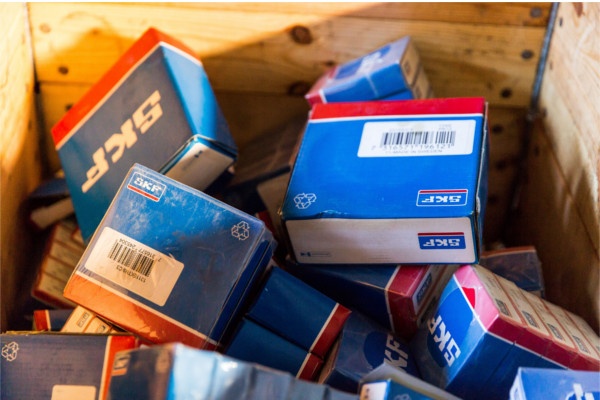
The Packaging and Label Code
Genuine manufacturers invest heavily in high-quality packaging to protect the product.
- The Visual Check: Check the font clarity and logo colors. Fakes often feature slightly blurred text (“ghosting”) or “washed out” colors due to cheaper printing methods.
- The Barcode Test: Use the manufacturer’s app to scan the box code.
- Warning: Sophisticated counterfeiters now copy valid codes from real boxes. A correct scan is a good sign, but not a guarantee of authenticity.
The Markings (Laser vs. Acid)
-
Genuine: Most premium bearings use Laser Marking. The etching is refined, distinct, and does not fade when rubbed.
-
Fake: Counterfeits often use acid etching or stamp printing.
-
The Touch Test: Run your finger over the text. If it feels rough, smears with solvent, or can be scratched off with a fingernail, it is likely a fake.
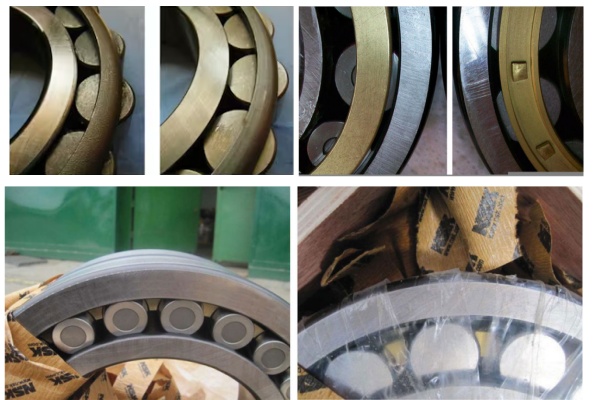
The “Shiny” Trap (Finish Quality)
Cheap steel is often over-polished to look “new.”
-
The Visual Check: Look at the chamfers (the corners of the rings) and the raceway. Genuine bearings have consistent, precision-ground finishes. Fakes often look overly shiny on the surface but show poor geometric precision in the raceways (black lines or uneven grinding marks).
The Material: Carbon Steel vs. Chrome Steel
This is the invisible killer. Genuine industrial bearings use GCr15 (SAE 52100) Chrome Steel. Fakes often use Carbon Steel to cut costs. Carbon steel lacks the fatigue life required for industrial use. While it looks the same, it creates micro-cracks under load, leading to catastrophic failure within weeks.
-
Quick Test: Chrome steel is harder. If you run a file across a non-critical area and it digs in easily, it might be soft carbon steel.
The Price Gap
-
The Rule of Thumb: If a supplier offers you an SKF or FAG bearing at 30-50% below the market distributor price, it is a fake.
-
There are no “secret channels” that offer such massive discounts on genuine Tier-1 brands. If it seems too good to be true, it is.
Part 2: The Strategic Shift – Why “Buying Big Brands” is Risky
Even if you know how to spot a fake, the risk remains.
The supply chain for major global brands is long and complex. A bearing might pass through a master distributor, a regional wholesaler, and a local trader before it reaches you. Every step in this chain is an opportunity for fake products to be swapped in.
Furthermore, when you buy a top-tier brand, you are paying a “Brand Premium.” A significant portion of your cost goes towards their global marketing, sponsorships, and legacy overheads—not just the steel and engineering.
We aren’t saying you should replace SKF on your main turbine overnight. That requires a level of confidence we haven’t earned from you yet. But we are saying: Don’t waste premium budget on a simple conveyor roller.
Use TFL for these applications as a validation step. It allows you to immediately reduce costs while verifying our Z3V3 quality firsthand. Let us prove our consistency on your general assets, and we are confident we will earn your trust for the long haul.

Part 3: The Smart Alternative – Why TFL Bearing?
At TFL Bearing, we offer a solution that eliminates the risk of counterfeits while significantly reducing your procurement costs. We call this “Interchangeable Quality.”
Here is why switching to TFL for your non-core and industrial applications is the safer, smarter choice:
1. Factory Direct = Zero Risk of Fakes
When you buy from TFL, you are buying directly from the manufacturer. There are no middlemen to swap the goods. You get exactly what you ordered, every single time.
2. Material Transparency (GCr15 Only)
We do not compromise. All TFL bearings are manufactured using premium GCr15 (SAE 52100) Chrome Steel. We provide full traceability, including:
-
Heat Treatment Reports
-
Material Composition Analysis (Spectrometer Reports)
-
You never have to guess what your bearing is made of.
3. ISO Certified Precision (Z3V3 Standards)
We focus on what impacts performance: low noise and vibration.
-
The Spec: TFL bearings are manufactured to Z3V3 (EMQ – Electric Motor Quality) standards.
-
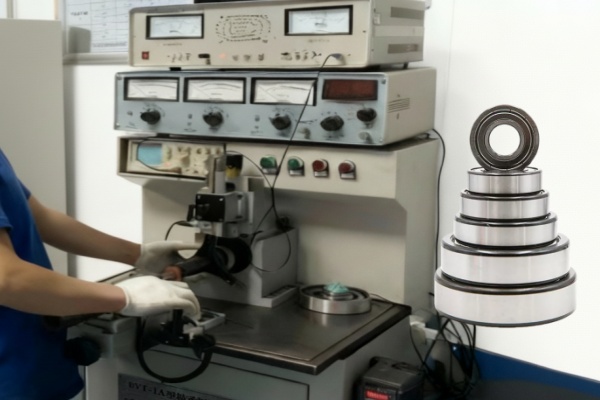
The Benefit: This translates to lower operating temperatures and extended motor life. We verify every batch using precision instruments (like Andersometer or Talyrond roundness testers) to ensure consistent geometry.
4. 12-Month Quality Guarantee
We stand behind our product. TFL offers a standard 1-year warranty on manufacturing defects. We don’t just sell you a bearing; we sell you peace of mind.
We invite serious B2B buyers and OEM partners to validate our quality. Don’t take our word for it—test the steel yourself.
Contact Our Engineering Team HERE.
Conclusion
Protecting your machinery doesn’t mean you have to pay the highest price tag, nor does it mean you have to stress over inspecting every box for counterfeits.
The smartest supply chain strategy is to stop paying for the logo and start paying for performance.
By switching to TFL Bearing for your standard industrial applications, you secure a reliable supply chain, reduce costs by 20-30%, and eliminate the risk of counterfeit parts forever.
Stop paying for the logo. Start paying for performance.
Unsure about the quality difference?
We invite you to test us. Send us a P/N (Part Number) you currently buy. We will quote you within 24 hours so you can see the immediate savings.